
Many first-time investors start with as little as $50 in an S&P 500 index fund through a mobile app. That small step can grow into a life-changing habit. Over the past decade, even modest regular contributions have turned into six-figure portfolios for disciplined investors. You do not need thousands to start building wealth.
The biggest myth about investing is that you need a lot of money to begin. That was true decades ago when brokers charged $50 per trade and mutual funds required $3,000 minimums. Today, you can start investing with literally $1 through fractional shares and zero-commission platforms.
Why You Should Start Investing Now
Time in the market beats timing the market. Thanks to compound growth, the earlier you start, the less you need to invest overall.
Consider this example: Person A invests $200 per month starting at age 25 and stops at 35, investing $24,000 total over 10 years. Person B invests $200 per month starting at age 35 and continues until 65, investing $72,000 total over 30 years.
At a 7% average annual return, Person A ends up with $350,000 at age 65. Person B ends up with $283,000. Person A invested one-third as much but ended up with more money because of the extra years of compound growth.

Step 1: Get Your Financial Foundation Right
Before investing, handle these basics:
- Pay off high-interest debt: If you have credit card debt at 20% or higher APR, pay that first. No investment reliably beats that guaranteed return. See our debt payoff guide for help.
- Build a starter emergency fund: Keep at least $1,000 in savings before investing, so you do not have to sell investments for unexpected expenses.
- Have a budget: Know how much you can consistently invest each month.
Step 2: Choose Your Investment Account
Where you invest matters as much as what you invest in because of taxes.
Tax-Advantaged Accounts - Invest Here First
401(k) through work: If your employer matches contributions, this is free money. Always contribute at least enough to get the full match.
Roth IRA: You contribute after-tax money, but all growth and withdrawals in retirement are tax-free. The 2026 contribution limit is $7,000 or $8,000 if you are 50 or older. This is one of the best accounts for young investors.
Traditional IRA: Contributions may be tax-deductible now, but you pay taxes on withdrawals in retirement.
Taxable Brokerage Account
If you have maxed out tax-advantaged accounts or need flexibility since you can withdraw anytime without penalties, a regular brokerage account works. You will pay capital gains taxes on profits, but there are no contribution limits or withdrawal restrictions.
Step 3: Pick a Brokerage Platform
Look for $0 commissions on stocks and ETFs, fractional share investing, no account minimums, a user-friendly mobile app, and access to low-cost index funds.
Top platforms for beginners include Fidelity, Charles Schwab, and Vanguard for traditional investors, or Robinhood and M1 Finance for mobile-first users.
Step 4: Decide What to Invest In
For beginners, simplicity is key. You do not need to pick individual stocks.
Index Funds and ETFs - Best for Beginners
An index fund holds hundreds or thousands of stocks that mirror a market index. When you buy a total stock market index fund, you own a piece of nearly every public company in America.
Recommended starter investments:
- Total US Stock Market: VTI from Vanguard or ITOT from iShares
- S&P 500: VOO from Vanguard or SPY from SPDR
- Total World Stock: VT from Vanguard for global diversification
These funds charge expense ratios as low as 0.03%, meaning you pay just $3 per year for every $10,000 invested.
Target Date Funds - Simplest Option
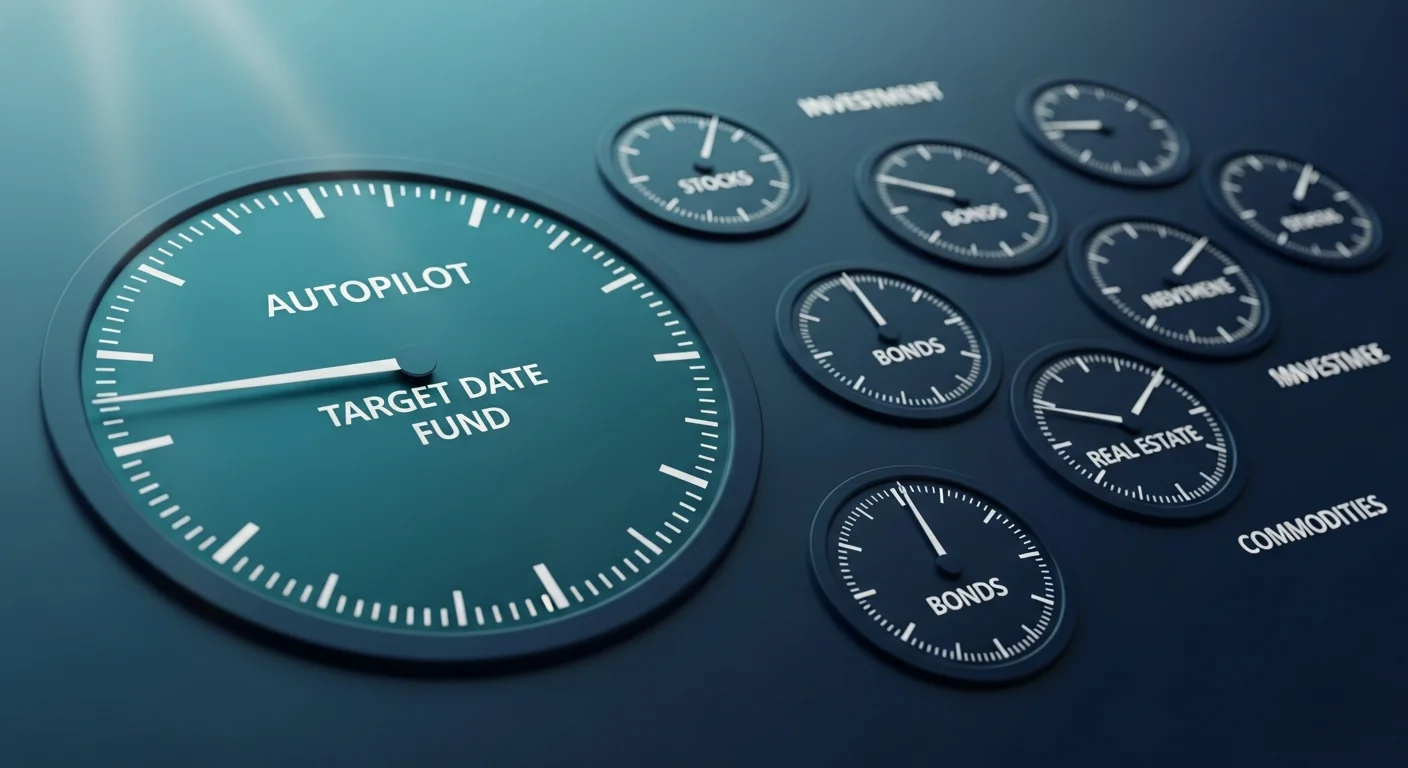
If you want truly hands-off investing, target date funds automatically adjust your asset allocation as you approach retirement. Pick the fund closest to your expected retirement year and invest everything there.
Step 5: Set Up Automatic Investing
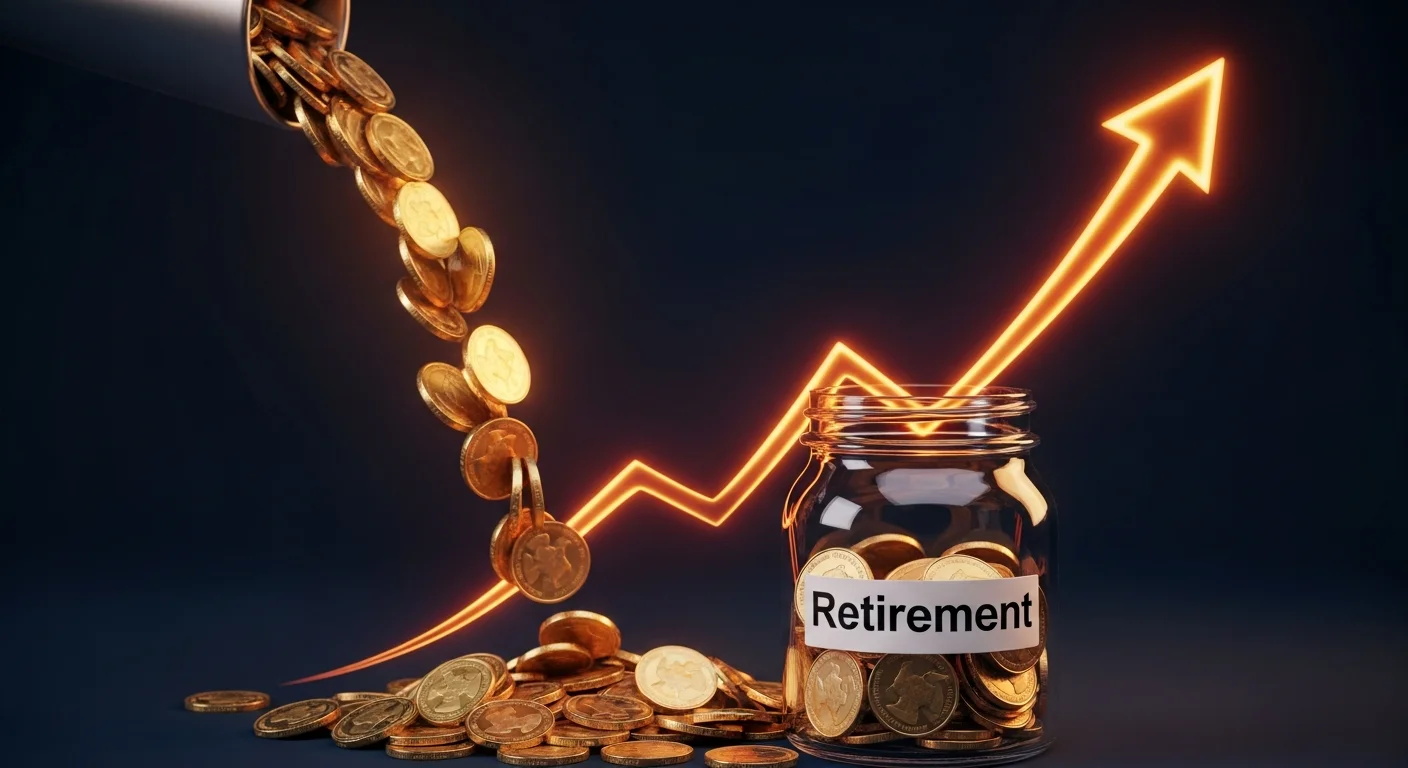
The secret to building wealth is consistency, not timing. Set up automatic transfers from your bank to your investment account every payday. Even $50 per paycheck adds up to $1,300 per year, which could grow to $30,000 or more over 15 years.
Understanding Risk and Volatility
The stock market goes up and down. Some years it gains 30%. Some years it loses 30%. On average, over long periods, it returns about 7-10% annually after inflation.
Key principles: Only invest money you will not need for at least 5 years, preferably 10 or more. When the market drops, that is a sale, not a reason to panic. Stay invested through volatility because selling low locks in losses. The more time you have, the more stock-heavy your portfolio can be.
Sample Starter Portfolios
The One-Fund Portfolio ($500)
100% Vanguard Target Retirement Fund, picking your expected retirement year. This is genuinely all you need if you want maximum simplicity. These funds automatically rebalance between stocks and bonds as you age, with expense ratios around 0.12-0.15%.
The Three-Fund Portfolio ($500+)
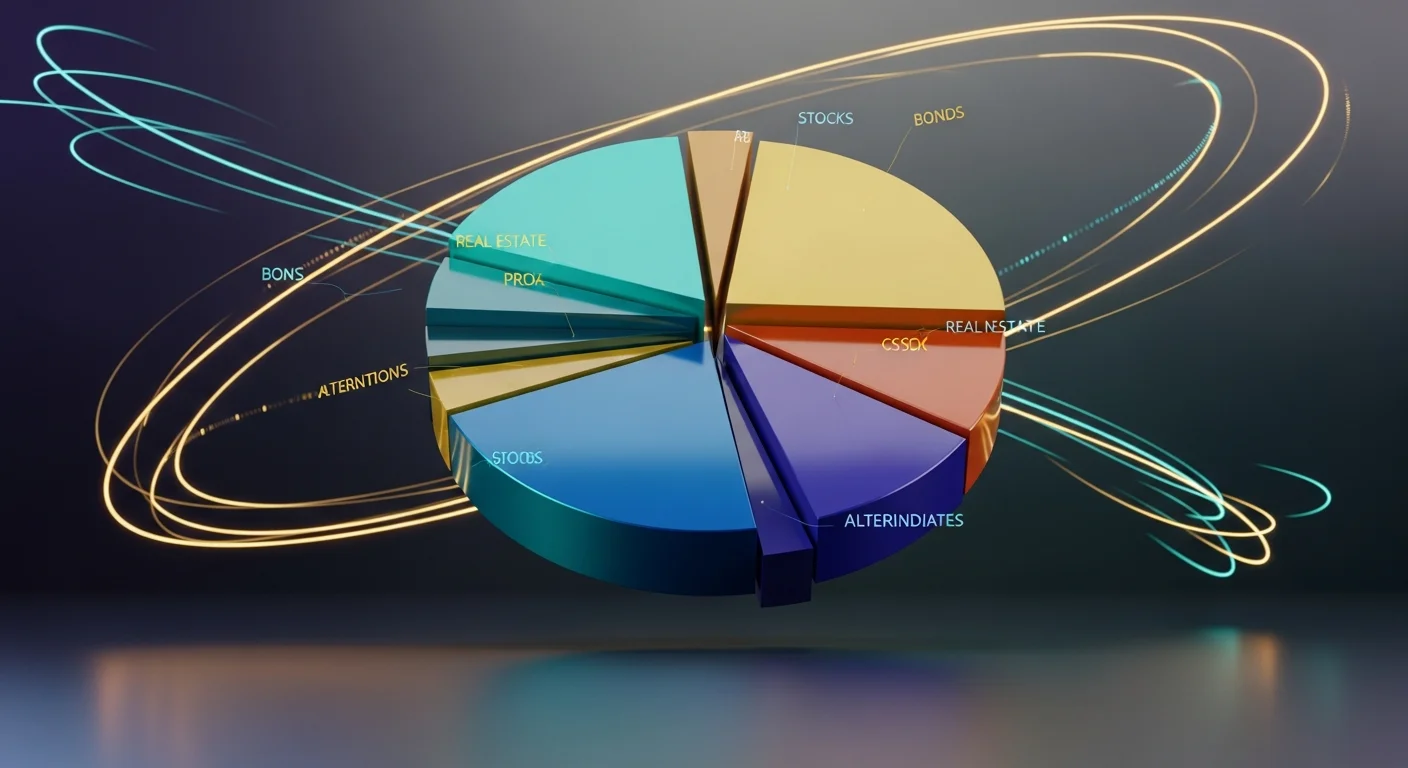
- 60% Total US Stock Market (VTI or VTSAX) - $300
- 30% Total International Stock (VXUS or VTIAX) - $150
- 10% Total Bond Market (BND or VBTLX) - $50
Adjust bond allocation higher as you get older. A common rule of thumb is holding your age as a percentage in bonds, so a 25-year-old might keep just 10-25% in bonds while a 50-year-old might hold 40-50%. For a deeper comparison of these fund types, see our index funds vs ETFs guide.
The Aggressive Growth Portfolio ($500+)
- 50% Total US Stock Market (VTI) - $250
- 30% Total International Stock (VXUS) - $150
- 10% Small-Cap Value (VBR) - $50
- 10% Emerging Markets (VWO) - $50
This portfolio tilts toward higher growth potential but carries more volatility. Only appropriate if you have a 15+ year time horizon and can stomach larger drawdowns during market downturns.
The Income-Focused Portfolio ($500+)
- 40% Total US Stock Market (VTI) - $200
- 20% Dividend Appreciation (VIG) - $100
- 20% Total International Stock (VXUS) - $100
- 20% Total Bond Market (BND) - $100
Designed for investors who want a balance of growth and income. The dividend component provides regular cash flow that can be reinvested. Learn more about building dividend income in our complete guide to dividend investing.
Fractional Shares and Micro-Investing
Fractional shares have revolutionized investing for beginners. Instead of needing hundreds of dollars to buy a single share of a company or ETF, you can invest any dollar amount and own a proportional fraction of a share.
For example, if an ETF trades at $450 per share and you invest $50, you would own approximately 0.111 shares. You receive proportional dividends and your investment grows or shrinks at the same percentage rate as the full share.
Brokerages offering fractional shares:
- Fidelity: Fractional shares on stocks and ETFs with as little as $1. No account minimum. Also offers the Fidelity ZERO index funds with 0.00% expense ratios.
- Charles Schwab: Schwab Stock Slices allow $5 minimums on S&P 500 stocks. Full fractional ETF support through Schwab Intelligent Portfolios.
- Robinhood: $1 minimum on thousands of stocks and ETFs. Clean mobile interface that appeals to younger investors.
- M1 Finance: Automated investing with fractional shares built into "pie" portfolios. Good for investors who want to set an allocation and auto-invest.
According to Schwab's research, the availability of fractional shares has significantly increased participation among younger and first-time investors, making it possible to build diversified portfolios with very small amounts.
Common Beginner Mistakes to Avoid
Starting early is important, but starting wisely matters too. Here are the most common mistakes new investors make:
Mistake 1: Trying to Pick Individual Stocks
New investors often gravitate toward individual stocks they know (their employer, favorite brands, or trending companies). The problem is that individual stock picking exposes you to enormous concentration risk. According to research by JP Morgan, roughly 40% of all stocks have suffered permanent declines of 70% or more from their peak value. Broad index funds eliminate this risk by spreading your money across hundreds or thousands of companies.
Mistake 2: Checking Your Portfolio Too Often
The stock market moves up and down daily. When you check every day, the emotional rollercoaster can lead to panic selling during dips. Studies show that investors who check their portfolios less frequently tend to stay invested longer and earn better returns. Set it, automate it, and check quarterly at most.
Mistake 3: Waiting for the "Right Time" to Invest
Market timing is nearly impossible, even for professionals. A Schwab study found that investing immediately beat waiting for the "perfect" entry point in the vast majority of historical periods. Dollar-cost averaging, where you invest fixed amounts at regular intervals, removes the timing question entirely.
Mistake 4: Investing Money You Need Soon
Never invest money you will need within the next 3-5 years. If you have a down payment, emergency fund, or upcoming large expense, that money belongs in a high-yield savings account, CD, or money market account, not the stock market. The market can drop 30-40% in a given year, and you do not want to be forced to sell at a loss.
Mistake 5: Ignoring Tax-Advantaged Accounts
Many beginners open a taxable brokerage account without first maxing out their Roth IRA or contributing enough to their 401(k) to capture the employer match. Tax-advantaged accounts can save you tens of thousands in taxes over your investing lifetime. If you earn under the income limits, a Roth IRA should be your first investing account. If you are above the limits, consider a backdoor Roth IRA conversion.
Mistake 6: Paying High Fees
Some funds charge expense ratios of 1% or more. On a $100,000 portfolio, that is $1,000 per year in fees, compared to just $30-40 for a low-cost index fund. Over 30 years, the difference can amount to over $100,000 in lost wealth. Always check the expense ratio before investing in any fund.
The Bottom Line
You do not need to be rich to start investing. You need to start investing to become rich. Every dollar you invest today is a seed that grows into future wealth. Open an account today. Fund it with whatever you can. Your future self will thank you.
The key takeaways: start with tax-advantaged accounts, use low-cost index funds or ETFs, automate your contributions, and do not touch the money for decades. That simple formula has built more wealth for ordinary people than any stock-picking strategy ever devised.
Related Reading
- Index Funds vs ETFs: Which is Right for You? - Understand the difference between these two popular investment vehicles
- Roth IRA and Backdoor Roth Guide - Advanced strategies for tax-free retirement growth
- Real Estate Investing for Beginners - Diversify beyond stocks and bonds
- IRA vs 401(k): Which Retirement Account is Best? - Choose the right retirement account for your situation
- Capital Gains Tax Guide 2026 - Understanding taxes on your investment gains from day one
- Long-Term Capital Gains Tax 2026 - Why holding longer drastically reduces your tax bill
Frequently Asked Questions
Is $500 Enough to Start Investing?
Yes, $500 is more than enough to start investing in 2026. With fractional shares and zero-commission brokerages like Fidelity, Schwab, and Robinhood, you can invest as little as $1 in diversified index funds and ETFs. A $500 starting amount allows you to build a well-diversified portfolio across US stocks, international stocks, and bonds. The key is starting early and investing consistently, even in small amounts, to take advantage of compound growth over time.
What Is the Best Investment for Beginners?
For most beginners, a low-cost total stock market index fund or a target date retirement fund is the best starting investment. Total stock market index funds like VTI or ITOT give you exposure to thousands of companies in a single purchase with expense ratios as low as 0.03%. Target date funds automatically adjust your stock-to-bond allocation as you approach retirement, making them the simplest hands-off option. Both approaches outperform the vast majority of actively managed funds over long periods.
Should I Buy Index Funds or Individual Stocks?
Beginners should strongly favor index funds over individual stocks. Research shows that roughly 40% of individual stocks have suffered permanent declines of 70% or more from their peak value, making stock picking extremely risky for inexperienced investors. Index funds spread your risk across hundreds or thousands of companies, ensuring that one bad stock does not devastate your portfolio. Even most professional fund managers fail to beat index fund returns consistently over 10+ year periods.
How Do I Open a Brokerage Account?
Opening a brokerage account takes about 10-15 minutes online. Choose a platform like Fidelity, Charles Schwab, or Vanguard, then provide your Social Security number, employment information, and bank account details for funding. Most brokerages have no minimum balance requirements. Once approved, link your bank account, transfer funds, and you can start investing immediately. For tax-advantaged investing, select a Roth IRA account type during signup if you are eligible based on income limits.
Should Beginners Use a Roth IRA or Taxable Brokerage Account?
If you qualify based on income limits, a Roth IRA should generally be your first investment account. Contributions grow tax-free, and all withdrawals in retirement are tax-free, which can save you tens of thousands of dollars over your investing lifetime. The 2026 contribution limit is $7,000 per year ($8,000 if you are 50 or older). Only after maximizing your Roth IRA and capturing any employer 401(k) match should you consider a taxable brokerage account, which offers more flexibility but no tax advantages. See our IRA vs 401(k) guide for a detailed comparison.
How Much Should I Invest Each Month as a Beginner?
A good starting target is 10-15% of your gross income, but any consistent amount is better than nothing. If 10% feels too aggressive, start with whatever you can afford, even $25 or $50 per paycheck, and increase the amount by 1% every few months. Automating your contributions is critical because it removes the temptation to skip months. Over 30 years, even $100 per month invested in a total stock market index fund at a 7% average annual return grows to approximately $122,000.
Frequently Asked Questions
Is $500 Enough to Start Investing?
What Is the Best Investment for Beginners?
Should I Buy Index Funds or Individual Stocks?
How Do I Open a Brokerage Account?
Should Beginners Use a Roth IRA or Taxable Brokerage Account?
How Much Should I Invest Each Month as a Beginner?
Put the guide into practice