Quick answer
A checking account is built for regular money movement: paychecks, debit-card purchases, checks, ATM withdrawals, transfers, and bills. A strong account is not simply the one advertised as free. It is the account with the lowest realistic annual cost, reliable access, clear deposit timing, appropriate insurance, and settings that let you control what happens when cash runs short.
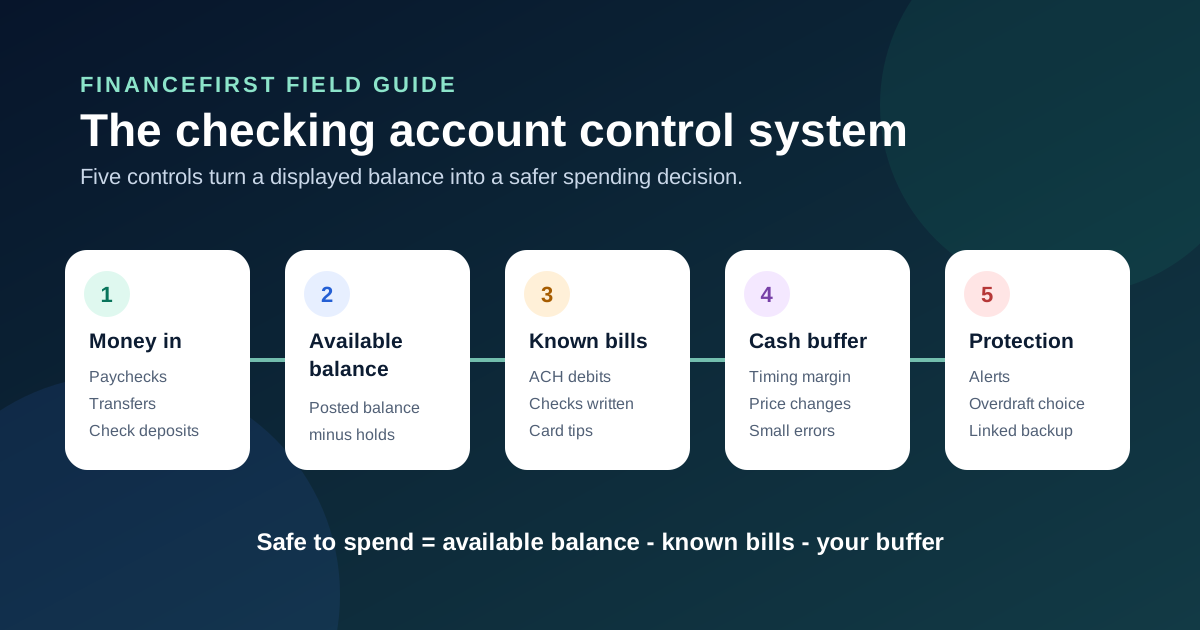
The five-part checking account control system
A bank app can show several numbers and still leave out a bill that has not reached the bank. Use a control system that joins the account display with your own obligations.
| Control | Question to answer | Where to verify it |
|---|---|---|
| Money in | When will a paycheck, transfer, cash deposit, or check become usable? | Funds-availability policy and hold notice |
| Balance | Which pending holds reduce what the institution treats as available? | Account activity and deposit agreement |
| Known payments | Which checks, ACH payments, tips, or subscriptions are not yet shown? | Your bill calendar and transaction register |
| Buffer | How much will remain untouched for timing changes and small errors? | Your chosen cash-flow rule |
| Protection | Will a shortfall be declined, returned, transferred, paid for a fee, or covered by credit? | Overdraft disclosure and current fee schedule |
The practical formula is:
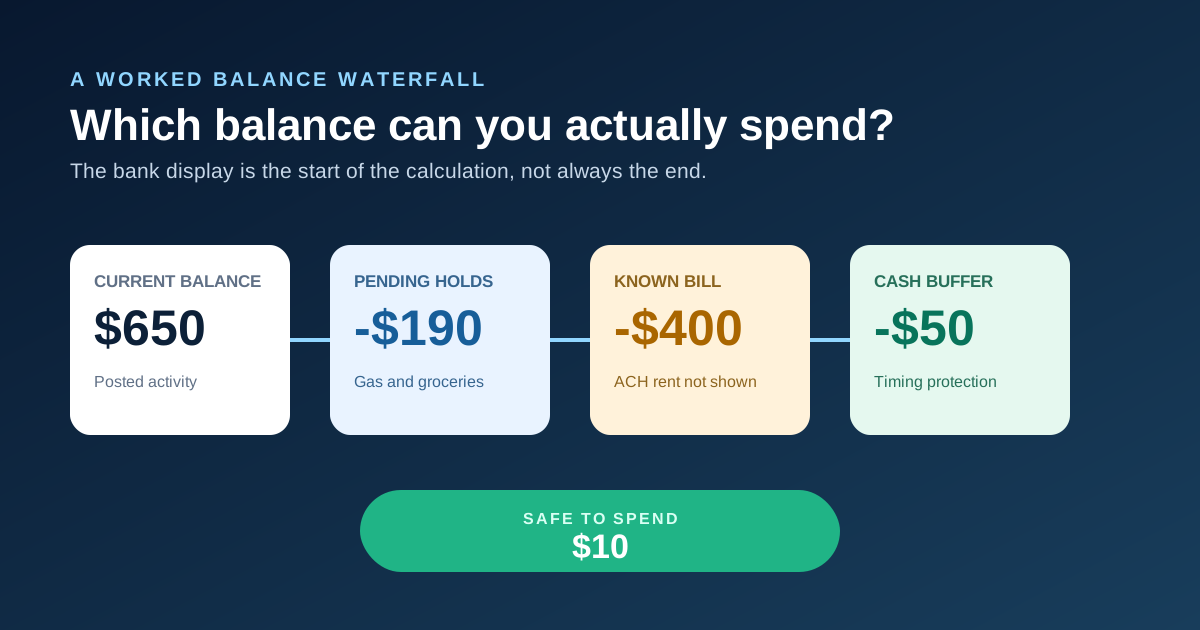
safe to spend = available balance - known unposted payments - cash-flow buffer
See the worked available-balance waterfall for a step-by-step example.
Compare annual cost, not the account label
Under the Truth in Savings rules, institutions disclose deposit-account terms such as fees, annual percentage yield, interest rate, and minimum-balance requirements. A monthly fee can sometimes be waived by direct deposit or a balance condition, but a waived fee is not guaranteed unless your expected behavior meets the rule every statement cycle.
Build an annual estimate from the costs that apply to you:
- monthly service fees after realistic waivers;
- your bank's out-of-network ATM fee plus the ATM operator's fee;
- overdraft, returned-payment, negative-balance, and linked-transfer fees;
- paper statements, checks, stop payments, wires, and other services you use; and
- interest you expect to earn at your average balance.
The Checking Account Cost Calculator compares two fee schedules using the same behavior assumptions. It subtracts estimated annual interest from modeled annual fees and shows the result by category. It does not predict changing balances, merchant fees, rewards, taxes, or future policy changes.
Verify access and insurance
Check branch access, ATM coverage, mobile-deposit limits, customer-support hours, alerts, card controls, joint-owner access, and whether the institution supports the payments you use. A high rate or sign-up offer does not compensate for an account that blocks an essential cash-flow path.
Eligible checking deposits at an FDIC-insured bank are covered under FDIC rules. The standard amount is $250,000 per depositor, per insured bank, for each account ownership category. The FDIC combines deposits within the same ownership category at the same bank, so separate checking and savings accounts do not automatically create separate limits. Federally insured credit-union share accounts receive similar federal coverage through the NCUA under its rules. Verify the institution and ownership structure instead of relying only on a logo or an app's marketing page. FinanceFirst's FDIC insurance definition explains the categories in more detail.
Understand current balance and available balance
Available balance is usually more useful before a purchase because it may reflect holds or pending transactions that the current balance does not. It is still not a complete spending plan. A written check, scheduled ACH debit, adjusted restaurant tip, recurring payment, or released card hold may be absent or change later.
The CFPB has addressed overdraft fees involving a debit-card transaction that was authorized when the consumer had enough available funds but settled after intervening activity reduced the balance. The institution's agreement and transaction sequence still matter, which is why a personal register and buffer add information the display cannot.
Read the deposit-availability policy before you need it
Regulation CC sets maximum schedules for many check deposits, but it does not mean every deposited check is immediately final. Cutoff times, business days, deposit method, new-account status, large deposits, repeated overdrafts, redeposited checks, collectibility concerns, and emergencies can change availability.
Effective July 1, 2025, the first $275 of many check deposits that are not otherwise entitled to next-day availability generally must be available by the next business day. The regulation also uses a $6,725 threshold for certain large-deposit and new-account rules. Those numbers are dated regulatory values, not permanent account features. Use the detailed check-deposit hold timeline and the actual hold notice for the release date.
Choose the shortfall outcome by transaction type
"Overdraft protection" can describe different arrangements. A linked savings transfer uses your money and may charge a transfer fee. An overdraft line of credit borrows money under credit terms. Discretionary overdraft coverage may let an item post and charge a fee. Declining coverage can cause a payment to be rejected or returned, which may create a merchant fee or service consequence.
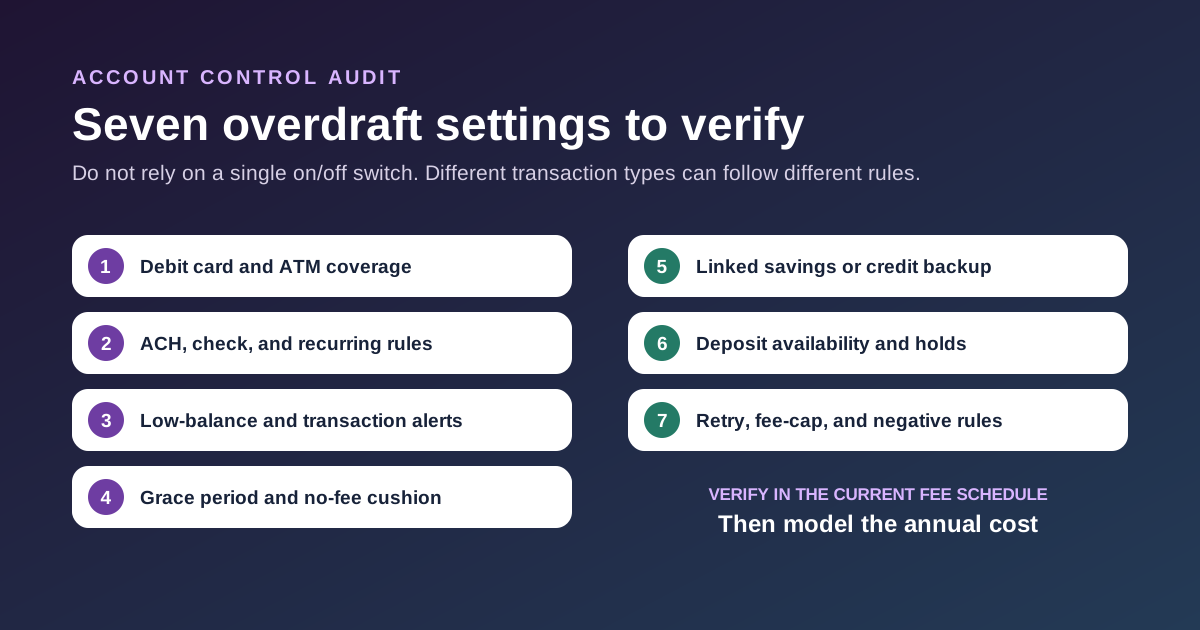
Regulation E generally requires affirmative consent before a financial institution charges a fee for paying an ATM or one-time debit-card overdraft. That opt-in rule does not apply in the same way to checks, ACH payments, or recurring debit transactions. Use the seven-setting overdraft audit to document each outcome instead of treating overdraft as one switch.
If an account application is denied
A bank or credit union may use a checking-account consumer report when reviewing an application. The adverse-action notice should identify the reporting company used. Request the report, compare every item with your records, and dispute inaccurate or incomplete information with both the reporting company and the institution that supplied it. The checking-account denial recovery guide separates those steps from the search for a second-chance or other eligible account.
Opening-day checklist
- Save the account agreement, fee schedule, funds-availability policy, privacy notice, and overdraft disclosure.
- Confirm the monthly-fee waiver and set a reminder before the first statement closes.
- Set low-balance, transaction, deposit, card-not-present, and direct-deposit alerts where offered.
- Record the ATM and branch networks you can use without a fee.
- Choose and document the outcome for one-time debit and ATM transactions, checks, ACH payments, and recurring payments.
- Keep a separate cash-flow buffer in addition to any long-term emergency fund.
- Test a small transfer and bill payment before moving every automatic payment.
If you are still deciding where money belongs, compare the roles of a transaction account in savings vs. checking. Savings yield and checking-account control solve different problems.
Frequently asked questions
Is a free checking account free of every charge?
No. Under Regulation DD, an account described as free or no cost cannot have certain maintenance or activity charges, but it may still charge for services such as overdrafts, returned checks, ATM use, stop payments, dormant accounts, or check printing. Read the complete fee schedule.
Should I choose an interest-bearing checking account?
Compare the interest at your average balance with any added fee or balance requirement. A higher APY does not help if one missed waiver or frequent ATM charge costs more than the interest earned.
Does opting out of debit-card overdraft stop every returned payment?
No. The opt-in rule is focused on ATM and one-time debit-card overdraft fees. Checks, ACH payments, recurring transactions, and merchant consequences can follow different rules.
Primary sources
Frequently Asked Questions
Is a free checking account free of every charge?
Should I choose an interest-bearing checking account?
Does opting out of debit-card overdraft stop every returned payment?
Put the guide into practice