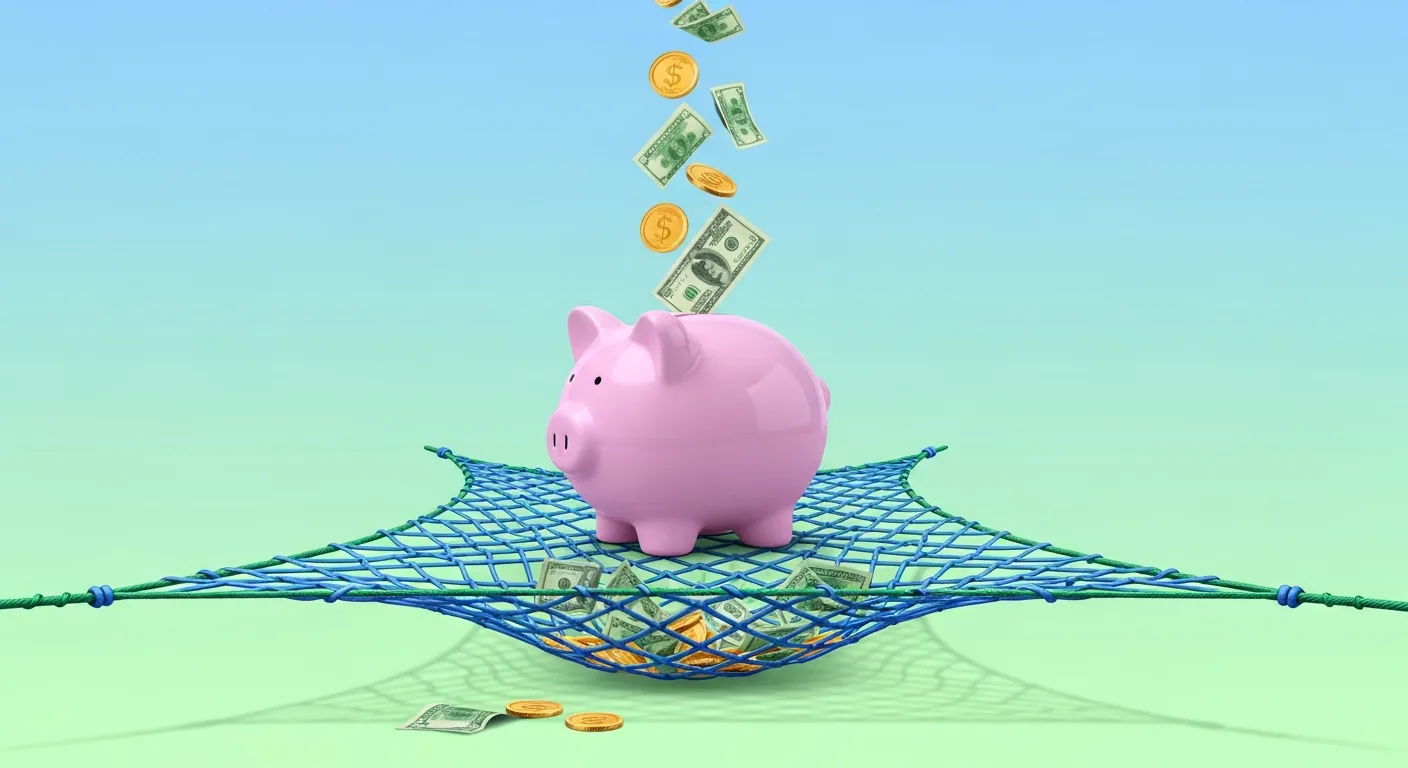
A checking account is for spending. A savings account is for growing. If you are keeping all of your money in one place, you are either missing out on interest or making everyday transactions harder than they need to be. The smartest approach uses both accounts together in a simple system.
Yet millions of Americans keep their entire balance in a single checking account earning 0.01% interest, or they park everything in savings and scramble every time a bill hits. Understanding the difference between these two fundamental account types and using each for its intended purpose is one of the simplest financial upgrades you can make.
Quick Answer: Savings vs Checking
A checking account is designed for frequent transactions: paying bills, swiping your debit card, writing checks, and receiving direct deposits. A savings account is designed to hold money you do not need immediately and earn interest on it. Most people need both.
- Best for daily spending: Checking account
- Best for earning interest: Savings account
- Best for bill payments: Checking account
- Best for emergency fund: Savings account
- Best for direct deposit: Checking account
- Best for short-term goals: Savings account
What Is a Checking Account?
A checking account is a transactional bank account designed for frequent deposits and withdrawals. It is where your paycheck lands, where your bills get paid from, and where your debit card pulls funds. Checking accounts prioritize access and flexibility over earning interest.
Most checking accounts come with:
- Debit card: For point-of-sale purchases and ATM withdrawals
- Check writing: For rent, some bills, or person-to-person payments
- Online bill pay: Schedule automatic payments directly from the account
- Direct deposit: Receive paychecks electronically
- Unlimited transactions: No caps on how often you can deposit or withdraw
The trade-off is that checking accounts typically pay little to no interest. The national average checking account APY is 0.07% according to the FDIC national rate data. On a $5,000 balance, that earns you roughly $3.50 per year.
What Is a Savings Account?
A savings account is designed to hold money you want to keep safe and earn interest on. Unlike checking accounts, savings accounts are not meant for daily transactions. Instead, they serve as a place to grow your cash reserves over time.
Key features of savings accounts:
- Interest earnings: Traditional savings pay 0.45% on average, but high-yield savings accounts pay 4% to 5% or more in 2026
- FDIC/NCUA insurance: Up to $250,000 per depositor, per institution
- Limited transactions: Historically limited to 6 withdrawals per month under Regulation D (many banks relaxed this after 2020, but some still enforce it)
- No debit card: Most savings accounts do not come with a debit card
- No check writing: You cannot write checks from a standard savings account
The purpose is straightforward: keep money you do not need for daily expenses in an account where it grows. Your emergency fund, vacation savings, or down payment fund should all live in a savings account, not checking.
Savings Account vs Checking Account: Side-by-Side Comparison
| Feature | Checking Account | Savings Account |
|---|---|---|
| Primary Purpose | Daily transactions | Storing and growing money |
| Interest Rate (2026) | 0.01% - 0.07% (avg) | 0.45% (avg) to 5.00%+ (HYSA) |
| Debit Card | Yes | Rarely |
| Check Writing | Yes | No |
| Direct Deposit | Yes | Sometimes |
| Transaction Limits | Unlimited | May be limited (6/month) |
| FDIC Insured | Yes, up to $250,000 | Yes, up to $250,000 |
| Monthly Fees | $0-$15 (often waivable) | $0-$5 (often waivable) |
| Minimum Balance | $0-$1,500 | $0-$500 |
| Best For | Bills, purchases, ATM use | Emergency fund, goals, reserves |
Interest Rate Differences: Why They Matter
The interest rate gap between checking and savings is the single biggest reason you need both accounts. Consider this example:
Interest Comparison: $20,000 Over 1 Year
- Checking account (0.07% APY): $14 earned
- Traditional savings (0.45% APY): $90 earned
- High-yield savings (4.50% APY): $900 earned
Same $20,000. Same FDIC protection. The difference is $886 per year just by choosing the right account. For a deeper comparison of savings options, see our HYSA vs CD vs money market guide.
Keeping $20,000 in checking instead of a high-yield savings account costs you roughly $900 per year in lost interest. Over five years, that is $4,500+ with compounding. The money is just as safe and just as accessible with an online transfer that typically takes 1-2 business days.
When to Use a Checking Account
Your checking account should be the hub of your daily financial life:
- Receiving income: Set up direct deposit for your paycheck
- Paying bills: Rent/mortgage, utilities, subscriptions, insurance premiums
- Everyday purchases: Groceries, gas, dining, shopping with your debit card
- Transferring money: Moving funds to savings, investment accounts, or other people
How much to keep in checking: Aim for 1 to 1.5 months of essential expenses. This gives you a comfortable cushion for bills and spending without keeping excess cash in a low-interest account. If your monthly expenses are $4,000, keep roughly $4,000-$6,000 in checking. Our budgeting guide can help you figure out your monthly spending baseline.
When to Use a Savings Account
Your savings account is for money with a purpose that is not immediate spending:
- Emergency fund: 3-6 months of expenses set aside for unexpected events like job loss, medical bills, or major repairs. See our guide on the best place to keep your emergency fund.
- Short-term savings goals: Vacation fund, new car fund, holiday gift budget, or wedding savings
- Down payment fund: Saving for a home purchase over 1-5 years. Learn more in our down payment savings guide.
- Cash reserves beyond your checking buffer: Any money beyond your 1-1.5 month checking cushion should be in savings
The key rule: if you will not spend the money this month, it should be in a savings account earning interest, not sitting idle in checking.
How to Use Both Accounts Together
The most effective approach is a simple two-account system:
Step 1: Set Up Direct Deposit to Checking
Your paycheck goes directly into checking. This is your operational account.
Step 2: Automate Transfers to Savings
On payday (or the day after), set up an automatic transfer from checking to savings. This is the "pay yourself first" principle in action. Transfer your savings goal amount before you have a chance to spend it.
Step 3: Keep a Fixed Cushion in Checking
Maintain 1-1.5 months of expenses in checking at all times. Everything above that cushion gets swept into savings.
Step 4: Only Pull from Savings When Needed
Treat savings withdrawals as intentional decisions, not casual transfers. If you need to dip into savings for a planned goal (like booking a vacation you saved for), that is fine. If you are pulling from savings to cover everyday spending, your budget needs adjusting.
Pro Tip: Multiple Savings Accounts
Many online banks let you open multiple savings accounts with custom names at no extra cost. Create separate accounts for different goals: "Emergency Fund," "Vacation 2026," "New Car," "Down Payment." This makes it easy to track progress and avoid accidentally spending money earmarked for a specific purpose.
Common Fees and How to Avoid Them
Checking Account Fees
- Monthly maintenance fee ($5-$15): Usually waived with direct deposit, minimum balance, or a certain number of transactions. Many online banks charge $0.
- Overdraft fee ($35 average): Opt out of overdraft protection or use an online bank with $0 overdraft fees. Some banks offer linked savings overdraft coverage for a smaller fee or no fee.
- ATM fees ($2-$5 per use): Use in-network ATMs or choose a bank that reimburses ATM fees
- Wire transfer fees ($15-$30): Use free alternatives like Zelle, ACH, or Venmo when possible
Savings Account Fees
- Monthly maintenance fee ($0-$5): Typically waived with a minimum balance. Online banks almost always charge $0.
- Excess withdrawal fee ($10-$15): Triggered if you exceed 6 withdrawals per month at banks that still enforce Regulation D limits
- Below-minimum-balance fee: Some banks charge if your balance drops below a stated minimum. Choose banks with $0 minimums to avoid this.
The simplest way to avoid all fees: Use an online bank for both checking and savings. Most online-only banks charge zero monthly fees, zero overdraft fees, and reimburse ATM charges.
Checking vs Savings: Special Account Types
High-Yield Checking Accounts
Some banks and credit unions offer checking accounts that pay 1% to 3% APY, though usually on limited balances (e.g., the first $15,000). These can work well if you keep a larger checking balance, but the rates rarely match what a dedicated high-yield savings account pays.
Money Market Accounts
A money market account is a hybrid that blends features of both checking and savings. It pays interest like a savings account but may offer check writing and debit card access like checking. If you want one account that does a bit of everything, a money market account is worth considering. Compare your options in our HYSA vs CD vs money market comparison.
Certificates of Deposit (CDs)
CDs pay higher rates than savings accounts but lock your money for a set term (3 months to 5 years). They are not a replacement for a savings account because of early withdrawal penalties, but they can complement your savings for money you will not need for a while. Learn more in our CD ladder strategy guide.
How Much Should You Keep in Each Account?
| Account | Recommended Balance | Why |
|---|---|---|
| Checking | 1-1.5 months expenses | Covers all bills and spending with a buffer |
| Emergency Fund (Savings) | 3-6 months expenses | Protection against job loss or major emergencies |
| Goal-Based Savings | Varies by goal | Vacation, car, down payment, or other targets |
For example, if your monthly expenses are $4,500:
- Checking: $4,500-$6,750
- Emergency savings: $13,500-$27,000 in a HYSA
- Goal savings: Whatever you are accumulating for specific purchases
Anything beyond these amounts should be considered for short-term investments or longer-term investing to grow your wealth further.
Can You Have Multiple Checking or Savings Accounts?
Yes. There is no limit to the number of bank accounts you can have. Many people find it useful to maintain:
- One primary checking: For all income and daily spending
- One bills-only checking: Dedicated to fixed monthly payments (rent, utilities, subscriptions) so you never accidentally spend bill money
- One emergency fund savings: Untouched except for true emergencies
- One or more goal-based savings: Named accounts for specific targets
This system creates natural separation between spending money, bill money, and saved money. It reduces the temptation to dip into savings because each dollar has a clear job.
Opening a New Account: What You Need
Opening either a checking or savings account requires:
- Government-issued ID: Driver's license, passport, or state ID
- Social Security number: Required for tax reporting on interest earned
- Initial deposit: Some banks require $25-$100 to open; many online banks require $0
- Personal information: Address, date of birth, phone number, email
Online account opening typically takes 5-10 minutes. Most online banks verify your identity instantly and your account is ready the same day. Funding your new account via ACH transfer from an existing bank takes 1-3 business days.
Frequently Asked Questions
Is it better to keep money in checking or savings?
Keep money you need for daily expenses and bill payments in checking. Keep everything else in savings to earn interest. The ideal setup is 1-1.5 months of expenses in checking and 3-6 months in a high-yield savings account as an emergency fund. Any cash beyond that should be in savings or invested. See our HYSA vs CD vs money market guide to compare the best savings options.
Can I use a savings account as my only bank account?
Technically yes, but it is not practical. Savings accounts typically do not come with debit cards, do not support check writing, and may limit you to 6 withdrawals per month. Paying bills, making purchases, and receiving direct deposits is much easier with a checking account. The best approach is to use both.
How many bank accounts should I have?
At minimum, one checking and one savings account. Many people benefit from 2-4 total accounts: a primary checking for spending, a savings account for their emergency fund, and one or two additional savings accounts for specific goals. There is no penalty for having multiple accounts, and it can make budgeting much easier.
Are online checking and savings accounts safe?
Yes, as long as the bank is FDIC insured (or NCUA insured for credit unions). Online banks offer the same $250,000 per depositor insurance as traditional banks. Many online banks are actually divisions of large established banks. Always verify FDIC membership at FDIC BankFind before opening an account.
What is the difference between a savings account and a money market account?
Both earn interest, but money market accounts may offer check writing and debit card access that standard savings accounts do not. Money market accounts sometimes require higher minimum balances. Interest rates are often comparable, though HYSAs frequently beat money market rates. Read our detailed HYSA vs CD vs money market comparison for a full breakdown.
Do I pay taxes on savings account interest?
Yes. Interest earned on savings accounts is taxable as ordinary income. Your bank will send you a 1099-INT form if you earn more than $10 in interest during the year. The interest is taxed at your regular income tax rate, not the lower capital gains rate. For strategies to minimize tax on savings, see our tax reduction strategies guide.
Should I use the same bank for checking and savings?
Using the same bank makes transfers between accounts instant, which is convenient. However, you may earn more interest by using a traditional bank for checking and an online bank for savings. Many people use a local bank or credit union for checking (for branch access and ATMs) and an online HYSA for savings (for the best interest rates). The 1-2 day transfer time between different banks is a minor trade-off for significantly higher interest.
Related Cash Management Guides
- HYSA vs CD vs Money Market: Best for Your Cash (2026)
- Best High-Yield Savings Accounts 2026
- Complete Guide to Building an Emergency Fund
- Best Short-Term Investments for Your Cash
- CD Ladder Strategy Guide 2026
- How to Create a Budget That Actually Works
Disclaimer: This article is for informational purposes only and does not constitute financial advice. Interest rates, fees, and account features vary by institution and are subject to change. Always review the terms and conditions of any bank account before opening. FDIC insurance covers up to $250,000 per depositor, per insured institution.
Build the checking side of the decision
After deciding how much cash belongs in each account type, use the Checking Account Guide to compare the checking account's annual cost, balance method, deposit access, insurance, and overdraft settings. The Checking Account Cost Calculator can compare two fee schedules using the same behavior assumptions.
Put the guide into practice