
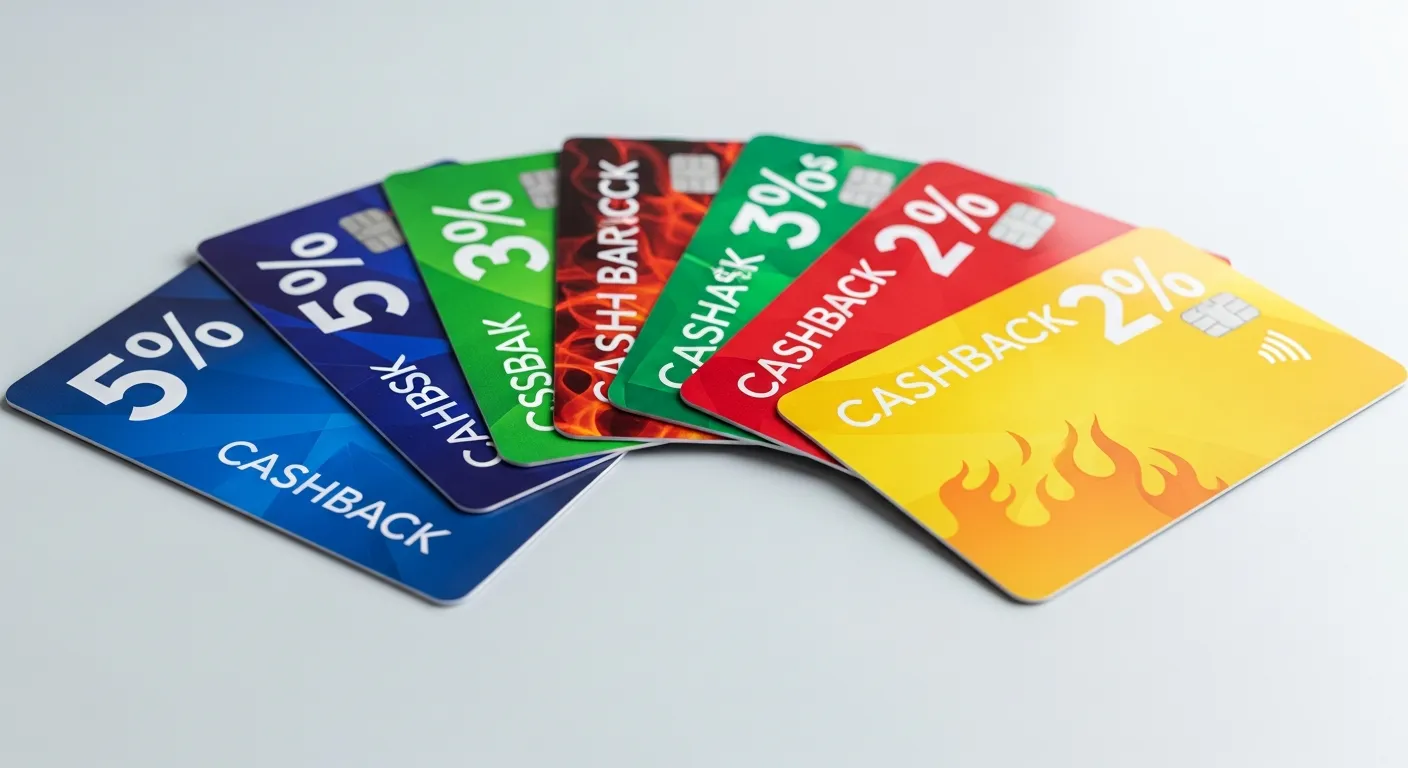
The average American household spends roughly $72,000 per year on goods and services according to the Bureau of Labor Statistics Consumer Expenditure Survey. At just 2% cash back, that is $1,440 per year in rewards, and strategic card pairing can push that total well above $1,800 annually. No gimmicks, no changing your habits, just using the right credit cards for each purchase category. Here is how to maximize every dollar you spend.
Cashback credit cards are the easiest way to earn money on purchases you are already making. Unlike travel rewards that require complicated redemption strategies, cash back goes straight to your bank account or statement credit, simple and valuable.
Top Credit Card Picks for 2026
- Best Overall: Chase Sapphire Preferred, travel and dining rewards with a strong welcome bonus
- Best Flat Cashback: Citi Double Cash, 2% on every purchase with no annual fee
- Best No Annual Fee: Chase Freedom Unlimited, 1.5% everywhere plus 3% on dining and drugstores
Understanding Cashback Credit Card Types
Flat-Rate Cashback Cards
These cards offer the same cashback percentage on all purchases, typically 1.5% to 2%. They are the simplest option, no categories to track, no activation required. Just use the card and earn consistently on everything.
Best for: People who want simplicity, those with spending spread across many categories, anyone tired of managing multiple cards.
Tiered Category Cards
These offer higher cashback (often 3-6%) in specific categories like groceries, gas, or dining, with a lower rate (1%) on everything else. The categories are fixed year-round.
Best for: People with predictable spending patterns who shop heavily in specific categories.
Rotating Category Cards
These offer 5% cashback on categories that change quarterly, like gas in Q1, groceries in Q2, Amazon in Q3. You typically need to activate each quarter to earn the bonus rate.
Best for: Engaged cardholders willing to track categories and activate bonuses.
Top Flat-Rate Cashback Cards for 2026
1. Citi Double Cash Card
- Reward Rate: 2% on everything (1% when you buy, 1% when you pay)
- Annual Fee: $0
- Sign-up Bonus: $200 after spending $1,500 in first 6 months
- Why It Stands Out: Highest unlimited flat rate available with no annual fee
2. Wells Fargo Active Cash Card
- Reward Rate: 2% on all purchases
- Annual Fee: $0
- Sign-up Bonus: $200 after spending $500 in first 3 months
- Why It Stands Out: Easier sign-up bonus threshold than Citi Double Cash, plus cell phone protection when you pay your bill with the card
3. Capital One Quicksilver
- Reward Rate: 1.5% on all purchases
- Annual Fee: $0
- Sign-up Bonus: $200 after spending $500 in first 3 months
- Why It Stands Out: No foreign transaction fees, making it great for travel
| Card | Cashback | Annual Fee | Best For |
|---|---|---|---|
| Citi Double Cash | 2% | $0 | Flat cashback on everything |
| Wells Fargo Active Cash | 2% | $0 | Simple rewards + cell protection |
| Capital One Quicksilver | 1.5% | $0 | Everyday spending + travel |
Want to compare these with travel and balance transfer cards? See the full comparison of all top credit cards for 2026 →
Best Category-Specific Cards for 2026
Best for Groceries: Blue Cash Preferred from American Express
- Grocery Reward: 6% back at U.S. supermarkets (on up to $6,000/year, then 1%)
- Streaming: 6% on select streaming services
- Gas & Transit: 3% back
- Annual Fee: $95
- Math: If you spend $500/month on groceries, you earn $360/year in grocery rewards alone, worth the annual fee
Best for Gas: Citi Custom Cash
- Top Category: 5% on your highest spending category each month (up to $500)
- Annual Fee: $0
- Why It Works for Gas: Automatically earns 5% on gas if that is your top category that billing cycle
Best for Dining: Capital One SavorOne
- Dining: 3% on dining and entertainment
- Groceries: 3% at grocery stores
- Streaming: 3% on popular streaming services
- Annual Fee: $0
Best for Amazon: Amazon Prime Rewards Visa
- Amazon & Whole Foods: 5% back
- Restaurants, Gas, Drugstores: 2%
- Everything Else: 1%
- Annual Fee: $0 (requires Prime membership at $139/year)
These category cards can outperform flat-rate cards depending on your spending mix. See how they compare to all top cards, including travel and balance transfer options →
Best Rotating Category Cards for 2026
Discover it Cash Back
- Bonus Categories: 5% on rotating quarterly categories (requires activation)
- First Year: Cash back match, Discover doubles all cash back earned in year one
- Annual Fee: $0
- 2026 Categories: Q1: Grocery stores; Q2: Gas stations; Q3: Amazon/Target/Walmart; Q4: Digital wallets
Chase Freedom Flex
- Rotating Categories: 5% on quarterly categories (up to $1,500/quarter)
- Fixed Bonuses: 5% on travel through Chase, 3% on dining and drugstores
- Annual Fee: $0
- Sign-up Bonus: $200 after spending $500 in first 3 months
Building Your Optimal Cashback Wallet
Serious cashback earners use 2-4 cards strategically. Here is the optimal setup:
- Primary Card (Flat Rate): Citi Double Cash or Wells Fargo Active Cash for 2% on everything not covered by specialty cards
- Grocery Card: Blue Cash Preferred for 6% at supermarkets
- Rotating Card: Discover it or Chase Freedom Flex for 5% bonus categories
- Store-Specific: Amazon Prime Rewards if you shop Amazon frequently
Not sure which card to use as your primary? Our complete 2026 credit card comparison scores each card across cashback, travel, sign-up bonuses, and more so you can build the right wallet for your situation.
How to Calculate If an Annual Fee Card Is Worth It
For cards with annual fees, calculate your break-even point:
Example: Blue Cash Preferred ($95 annual fee)
- 6% at grocery stores vs. 2% from a no-fee card = 4% extra
- $95 / 0.04 = $2,375 in grocery spending to break even
- That is about $198/month in groceries, most families easily exceed this
How to Maximize Your Cashback: Advanced Strategies
Earning the highest possible cashback requires more than just picking the right card. Here are proven strategies that experienced cardholders use to push their annual rewards higher:
1. Category Stacking
Use your highest-earning card for each spending category and a flat-rate card as your "everything else" backup. Consider a scenario: a household spending $800/month on groceries (Blue Cash Preferred at 6%), $200/month on gas (Citi Custom Cash at 5%), $300/month on dining (Capital One SavorOne at 3%), $100/month on Amazon (Prime Rewards Visa at 5%), and $1,500/month on everything else (Citi Double Cash at 2%). Annual cashback earnings: $576 groceries + $120 gas + $108 dining + $60 Amazon + $360 everything else = $1,224 per year, compared to $720 with a single 2% card. That is an extra $504 per year for minimal effort.
2. Timing Sign-Up Bonuses Strategically
Sign-up bonuses are the single most lucrative aspect of credit cards. A $200 bonus for spending $500 represents a 40% return. Plan new card applications around major planned purchases. Buying new furniture? Paying for a vacation? Time those expenses to meet minimum spend requirements. Most cards give you 3-6 months to reach the spending threshold.
3. Put Recurring Bills on the Right Card
Subscriptions, insurance premiums, gym memberships, utility bills, and cell phone payments can all go on credit cards. These are expenses you are paying anyway, routing them through a 2% cashback card earns rewards on autopilot. A household with $500/month in recurring bills earns $120/year from what would otherwise be zero-reward payments.
4. Use Shopping Portals for Online Purchases
Most major card issuers offer online shopping portals that stack additional cashback on top of your card's base rate. Chase offers ShopThroughChase, Capital One has Capital One Shopping, and Rakuten works with any card. These portals frequently offer 3-10% additional cashback at hundreds of retailers. Combined with your card's base rate, you can earn 5-12% on online purchases.
5. Pay Taxes and Tuition with Credit Cards
The IRS accepts credit card payments for tax bills through authorized processors. The processing fee is typically 1.85-1.98%. If you have a 2% cashback card, you earn a small net profit on tax payments. Some colleges also accept credit cards for tuition, though processing fees vary. Run the math before paying large bills this way.
Already using multiple cards and want to know which premium card is worth adding next? Check the best credit cards of 2026 ranked with side-by-side scores →
Cashback vs Points: Which Reward System Is Better?
Cashback and points-based rewards systems each have advantages. Here is how they compare:
| Factor | Cashback Cards | Points/Miles Cards |
|---|---|---|
| Simplicity | Very simple, cash is cash | Complex, value depends on redemption method |
| Guaranteed Value | 1 cent per point, always | 0.5 to 5+ cents per point depending on redemption |
| Best For | Everyday spending, those who dislike complexity | Frequent travelers who optimize redemptions |
| Annual Fees | Usually $0 | Often $95-$695 |
| Devaluation Risk | None, $1 is always $1 | Yes, programs regularly devalue points |
| Earning Rate | 1-6% typically | 1-5x points typically |
The verdict: Cashback is better for 80% of consumers. Points cards only win if you are a frequent traveler who is willing to learn the redemption strategies, and even then, the margin over cashback is often small. If you are not sure which system is right for you, start with cashback. You can always add a travel card later. For a deeper comparison, see our complete credit card rewards comparison guide.
How Cashback Affects Your Credit Score
Using credit cards strategically for cashback can actually improve your credit score over time, as long as you follow these rules:
- Always pay in full and on time: Payment history accounts for 35% of your FICO score. A single late payment can drop your score by 50-100 points.
- Keep utilization below 30%: Credit utilization (how much of your available credit you use) accounts for 30% of your score. If your limit is $10,000, keep your balance below $3,000 at any given time. Below 10% is even better.
- Do not open too many cards at once: Each application triggers a hard inquiry that can temporarily lower your score by 5-10 points. Space applications at least 3-6 months apart.
- Keep old accounts open: The length of your credit history matters. Even if you stop using a no-fee card, keep it open to maintain your average account age.
For a complete strategy on building excellent credit while maximizing rewards, see our guide to boosting your credit score fast.
Common Cashback Mistakes to Avoid
- Carrying a balance: Interest charges quickly exceed any cashback earned. The average credit card APR is over 22% according to the Federal Reserve. At that rate, a $1,000 balance costs $220 per year in interest, far more than the $20 cashback it might earn. Always pay in full.
- Forgetting to activate categories: Rotating category cards require quarterly activation, set calendar reminders for January 1, April 1, July 1, and October 1.
- Ignoring sign-up bonuses: A $200 bonus for spending $500 is a 40% return, do not miss it.
- Overspending to earn rewards: Cashback should come from purchases you would make anyway. Spending $100 to earn $2 is a loss, not a win.
- Not redeeming: Cash back sitting in your account earns nothing, redeem regularly or set up automatic statement credits.
- Using the wrong card: Putting groceries on a 1.5% card when you have a 6% grocery card in your wallet is leaving money on the table. Label your cards or use a wallet app to remind yourself which card to use where.
Ready to find the right card for your wallet?
Our comprehensive 2026 credit card guide scores every top card on cashback, travel rewards, sign-up bonuses, fees, and approval odds, making it easy to choose the best card for your spending profile.
See the Best Credit Cards of 2026 →Frequently Asked Questions About Cashback Credit Cards
What is the highest cashback rate available in 2026?
The highest ongoing cashback rate is 6% on U.S. supermarket purchases with the Blue Cash Preferred Card from American Express (up to $6,000 per year in purchases, then 1%). For rotating categories, the Chase Freedom Flex and Discover it Cash Back offer 5% on quarterly categories that you activate. If you stack multiple cards strategically, you can earn 3% to 6% on most spending categories. See our credit card rewards maximization guide for detailed stacking strategies.
Do cashback credit cards charge annual fees?
Many of the best cashback cards have no annual fee, including the Citi Double Cash (2% on everything), Chase Freedom Flex (5% rotating categories), and Wells Fargo Active Cash (2% flat rate). Some premium cashback cards like the Blue Cash Preferred ($95/year) charge an annual fee but offer higher reward rates that more than offset the cost for most households. A family spending $6,000 per year on groceries earns $360 in cashback at 6%, well above the $95 fee.
Is cashback better than travel rewards points?
For roughly 80% of consumers, cashback is the better choice. Cash back is simple, has a fixed value (1 cent per point), and requires no transfer partner knowledge or award booking skills. Travel points can deliver 2 to 5 cents per point when redeemed for premium travel, but only if you are willing to learn the system. If you are not a frequent traveler or do not want to manage multiple loyalty programs, cashback is the smarter pick. Our Best Credit Cards 2026 guide compares both reward systems head-to-head so you can see which type fits your lifestyle before you apply. You can also see our best travel credit cards guide for a full comparison.
Can I earn cashback on bills and subscriptions?
Yes. Most flat-rate cashback cards (like the Citi Double Cash or Wells Fargo Active Cash) earn 2% on all purchases, including recurring bills, streaming subscriptions, insurance payments, and utilities. Some category cards also offer bonus rates on specific bill types. Setting up autopay for bills on a cashback card is one of the easiest ways to accumulate rewards without changing any spending habits.
How do I redeem my cashback rewards?
Most issuers offer several redemption options: statement credits, direct deposit to your bank account, check, gift cards, or applying rewards toward purchases. Statement credits and direct deposits provide the best value at a flat 1 cent per point. Avoid redeeming for merchandise through the issuer's portal, as these redemptions typically deliver less than 1 cent per point in value.
Will applying for a cashback card hurt my credit score?
Each credit card application triggers a hard inquiry that can temporarily lower your credit score by 5 to 10 points. However, adding a new card also increases your total available credit, which can improve your credit utilization ratio over time. For most people, the short-term dip is minor and recovers within 3 to 6 months. Space applications at least 90 days apart and avoid applying for more than 2 to 3 cards within a 12-month period.
What is the difference between flat-rate and category cashback cards?
Flat-rate cards earn the same percentage on every purchase (typically 1.5% to 2%), making them simple and reliable. Category cards earn higher rates (3% to 6%) on specific spending categories like groceries, gas, or dining, but lower rates (1%) on everything else. The best strategy for most people is to pair one flat-rate card with one or two category cards to maximize earnings across all spending.
The Bottom Line
The best cashback strategy is one you will actually follow. A simple 2% flat-rate card beats a complex multi-card system if the latter causes you to miss activations or use the wrong card. Start simple, then add specialty cards as your spending patterns become clear.
Every dollar spent is an opportunity to earn cash back. Over a lifetime, optimizing your cards can easily return $50,000 or more. That is not a gimmick, that is smart spending backed by math.
Related Reading
- Best Cashback Credit Cards: Full Comparison - Side-by-side scores, category breakdown, and a card finder tool for cashback cards
- Best Credit Cards 2026 - Full rankings across cashback, travel, balance transfer, and more
- Best Travel Credit Cards 2026 - Compare travel rewards alternatives
- How to Maximize Credit Card Rewards - Advanced strategies to earn $2,000+ per year
- Boost Your Credit Score Fast - Improve your score to qualify for the best cards
- How to Create a Budget That Works - Make sure rewards fit your financial plan
- How to Build Wealth on Any Income - Cashback is one piece of the financial puzzle
- Best First Credit Card for Beginners 2026 - New to credit cards? Start here to choose the right one