
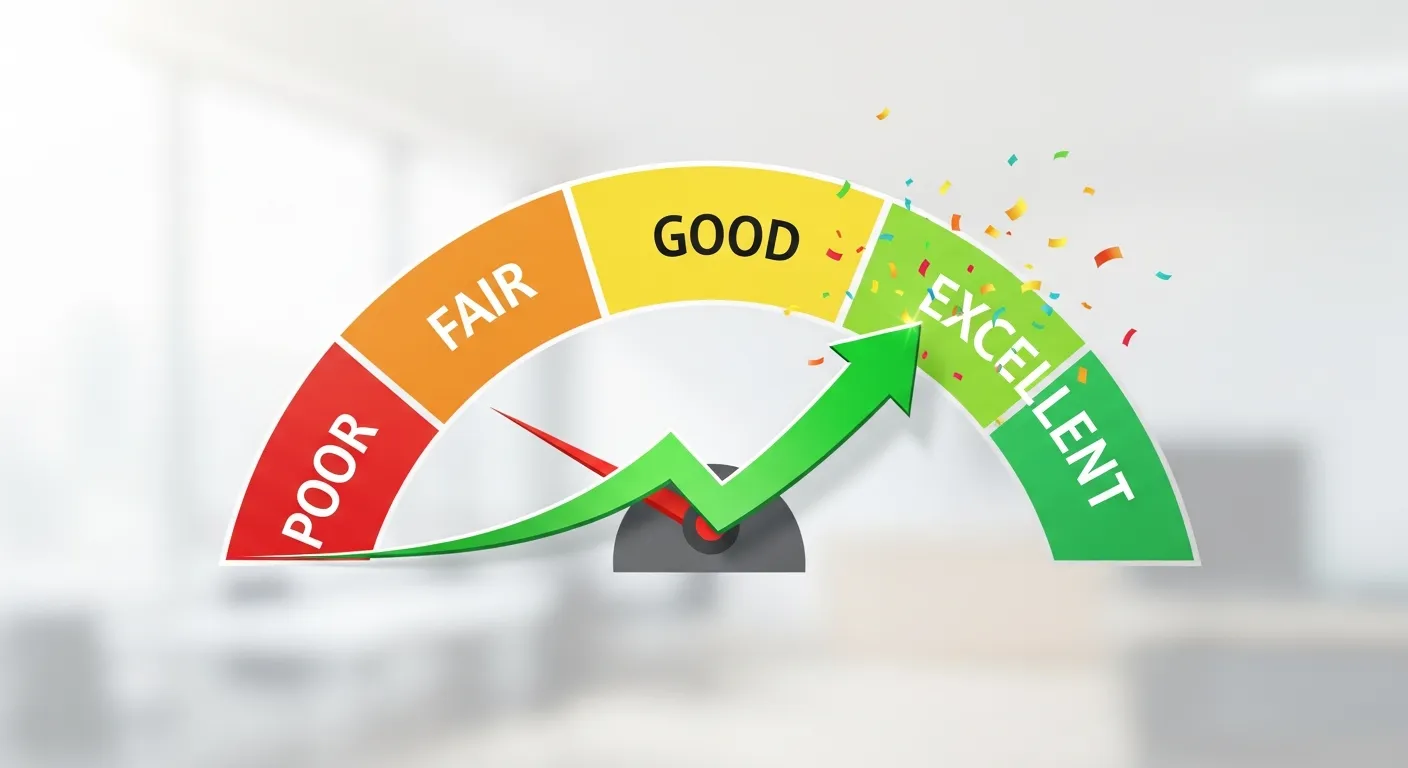
Your credit score is the three-digit number that quietly controls your financial life. It determines whether you get approved for that dream home, how much you pay for car insurance, and even whether you land certain jobs. Someone starting with a score of 612 can reach 780 within 18 months using the strategies in this guide. The good news? You have more control over this number than you might think.
The strategies below are not theoretical tips from textbooks. They are battle-tested methods that real people have used to boost their scores by 50, 100, even 200 points.
Understanding Your Credit Score: The Foundation
Before we dive into the strategies, you need to understand what you are working with. Your FICO score, which 90% of lenders use, ranges from 300 to 850:
- Exceptional (800-850): Best rates available
- Very Good (740-799): Excellent rates
- Good (670-739): Favorable rates
- Fair (580-669): Limited options, higher rates
- Poor (300-579): Difficulty getting approved
The 5 Factors That Control Your Score
1. Payment History (35%)
This is the biggest factor. A single 30-day late payment can drop your score by 80-110 points and stays on your report for 7 years. On-time payments are the foundation of good credit.
2. Credit Utilization (30%)
This is the percentage of available credit you are using. Using $1,500 of a $5,000 limit equals 30% utilization. For optimal scores, keep utilization below 10%. Individual card utilization also matters, having one card maxed out hurts even if overall utilization is low.
3. Length of Credit History (15%)
The longer your accounts have been open, the better. This includes the age of your oldest account, the average age of all accounts, and how long since you used certain accounts.
4. Credit Mix (10%)
Having different types of credit (credit cards, auto loans, mortgages, personal loans) shows lenders you can handle various responsibilities. Do not open accounts just for mix, but do not worry if you only have credit cards.
5. New Credit Inquiries (10%)
Each hard inquiry can ding your score by 5-10 points for up to 12 months. Multiple inquiries for the same loan type (mortgage shopping) within 14-45 days count as one inquiry.
15 Proven Strategies to Boost Your Score
Strategy 1: Get Your Free Credit Reports and Dispute Errors
About 25% of credit reports contain errors that could lower your score. Get your free reports from AnnualCreditReport.com and review them for:
- Accounts that are not yours
- Incorrect late payment records
- Wrong credit limits or balances
- Duplicate accounts
- Outdated information that should have aged off
Dispute errors online with each bureau (Equifax, Experian, TransUnion). They have 30 days to investigate and respond.
Strategy 2: Pay Down Credit Card Balances Strategically
Focus on getting utilization under 30%, then under 10%. Pay down the cards with the highest utilization first, this gives the biggest score boost per dollar paid. Make multiple payments per month to keep balances low.
Strategy 3: Become an Authorized User
Ask a family member with excellent credit to add you as an authorized user on one of their oldest, highest-limit cards with perfect payment history. You inherit that account's history on your report. You do not even need to use the card.
Strategy 4: Request Credit Limit Increases
Higher limits lower your utilization ratio without paying down debt. Call your card issuers and ask for increases. Many will grant them without a hard inquiry if you have been a good customer. Do this every 6-12 months.
Strategy 5: Set Up Automatic Payments
Payment history is 35% of your score. Set up autopay for at least the minimum payment on every account. Late payments stay on your report for 7 years, preventing them is critical.
Strategy 6: Keep Old Accounts Open
Closing old accounts hurts your credit history length and increases utilization (by reducing available credit). Keep your oldest accounts open even if you rarely use them. Use them occasionally so they do not get closed for inactivity.
Strategy 7: Use a Secured Credit Card
If you are rebuilding credit or starting fresh, a secured credit card is your best tool. You deposit money as collateral (typically $200-500), and that becomes your credit limit. Use it responsibly for 6-12 months, and many issuers will upgrade you to an unsecured card and return your deposit. See our comparison of the best secured cards for building credit in 2026 for specific card recommendations.
Strategy 8: Try Experian Boost
Experian Boost adds your on-time utility, phone, and streaming service payments to your Experian credit report. It is free and can add 10-20 points immediately. Only available for Experian, but many lenders use that bureau.
Strategy 9: Negotiate Goodwill Adjustments
If you have late payments on otherwise good accounts, write a goodwill letter to the creditor asking them to remove the late payment from your record. Explain your situation and highlight your otherwise good history. Success is not guaranteed, but many creditors will help loyal customers.
Strategy 10: Diversify Your Credit Mix Carefully
If you only have credit cards, adding an installment loan (like a credit-builder loan from a credit union) can help. But do not take on debt just for score points, the benefit is modest.
Strategy 11: Time Your Applications Strategically
When shopping for a mortgage, auto loan, or student loan, do all your rate shopping within a 14-45 day window. The scoring models treat this as a single inquiry. Avoid applying for credit cards in the months before a major loan application.
Strategy 12: Check for Fraudulent Accounts
Identity theft can destroy your credit. Review your reports for accounts you did not open, addresses you never lived at, and inquiries you did not authorize. If you find fraud, place a fraud alert and dispute immediately.
Strategy 13: Pay Bills Before the Statement Date
Your balance gets reported on or near your statement date, not your due date. Pay down your cards before the statement closes to report a lower balance. This can boost your score within one billing cycle.
Strategy 14: Ask for Rapid Rescoring
If you are in the mortgage process and make a payment that lowers your utilization significantly, ask your loan officer about rapid rescoring. This updates your credit score within days instead of waiting for the next reporting cycle, potentially saving you thousands in interest.
Strategy 15: Practice Patience and Consistency
Credit improvement is a marathon, not a sprint. The most impactful changes (payment history, account age) take months to years to fully affect your score. Stay consistent with good habits, and the score will follow.
How Fast Can You Boost Your Score?
Immediate (1-2 billing cycles): Paying down high utilization, correcting errors, using Experian Boost
Short-term (3-6 months): Building positive payment history, becoming an authorized user
Long-term (6-24 months): Recovering from late payments, building credit history length
The Bottom Line
Improving your credit score is not about quick tricks, it is about understanding the system and working within it strategically. Start with the high-impact items: dispute errors, lower utilization, and never miss payments. Then add the advanced strategies as you progress.
Every point matters. A 50-point improvement could save you tens of thousands on a mortgage, thousands on a car loan, and hundreds on insurance. The effort you put in today pays dividends for years.
Related Reading
- Best First Credit Card for Beginners 2026 - How to choose, get approved, and build credit fast
- Best Cashback Credit Cards 2026
- How to Pay Off Debt Fast
- Best Personal Loans for Bad Credit
Frequently Asked Questions
How Fast Can I Raise My Credit Score?
The speed of improvement depends on what is dragging your score down. The fastest improvements come from reducing credit utilization, which can boost your score by 20-50 points within one billing cycle (30 days). Getting errors removed from your credit report can also produce rapid results, typically within 30-45 days. Becoming an authorized user on a well-managed account can help within 1-2 months. More significant improvements from building consistent payment history or recovering from negative marks like late payments take 3-12 months. A complete credit rebuild from a very low score to good or excellent typically takes 12-24 months of disciplined effort.
What Is Considered a Good Credit Score?
FICO scores range from 300 to 850 and are categorized as follows: 300-579 is poor, 580-669 is fair, 670-739 is good, 740-799 is very good, and 800-850 is exceptional. A score of 670 or above qualifies you for most standard loan products. However, the best interest rates and terms are typically reserved for scores of 740 and above. For example, the difference between a 680 and a 760 credit score on a $300,000 30-year mortgage could save you $40,000 or more in total interest over the life of the loan.
Does Checking My Own Credit Score Lower It?
No, checking your own credit score is a "soft inquiry" and has absolutely no effect on your score. You can check your score as often as you want without any negative impact. Hard inquiries, which do affect your score, only occur when you apply for new credit and a lender pulls your report to make a lending decision. Each hard inquiry typically lowers your score by 5-10 points and stays on your report for two years, though its impact diminishes after a few months. Multiple hard inquiries for the same type of loan (mortgage, auto) within a 14-45 day window are usually counted as a single inquiry.
How Do I Dispute Errors on My Credit Report?
First, get your free credit reports from all three bureaus (Equifax, Experian, and TransUnion) at AnnualCreditReport.com. Review each report carefully for errors such as accounts that are not yours, incorrect balances, wrongly reported late payments, or outdated negative information. File disputes online through each bureau's website or by mail with supporting documentation. The bureau has 30 days to investigate and respond. If the error is verified, it must be corrected or removed. Common errors include mixed files (someone else's accounts on your report), paid collections still showing as unpaid, and incorrect account statuses.
What Is Credit Utilization and What Percentage Should I Aim For?
Credit utilization is the percentage of your available revolving credit that you are currently using. It is calculated by dividing your total credit card balances by your total credit limits. For optimal credit scoring, keep your overall utilization below 30%, and ideally below 10%. For example, if you have $10,000 in total credit limits across all cards, keep your combined balances below $3,000 (30%) or ideally below $1,000 (10%). Utilization is measured per card and overall, so try to keep each individual card below 30% as well. Paying down balances or requesting credit limit increases are the fastest ways to improve your utilization ratio and boost your score.